
 As was predicted over a month ago, MINI chose its MINI United event to pull the wraps off its fastest model yet, the John Cooper Works GP II. Claimed extensive use of motor sport technology, means that prototypes have already lapped the infamous Nurburgring circuit in 8 minutes and 23 seconds. This is almost 19 seconds faster than than the first GP that also debuted at MINI United in 2006.
Monthly Archives: May 2012
MINI John Cooper Works GP II officially revealed
As was predicted over a month ago, MINI chose its MINI United event to pull the wraps off its fastest model yet, the John Cooper Works GP II. Claimed extensive use of motor sport technology, means that prototypes have already lapped the infamous Nurburgring circuit in 8 minutes and 23 seconds. This is almost 19 seconds faster than than the first GP that also debuted at MINI United in 2006.
England’s roads not suitable for 80mph limit

The Road Safety Foundation (RSF) has claimed that England’s road network isn’t safe enough for an 80mph limit, due to lack of crash barriers and poor road maintenance. According to a story in The Telegraph, the lack of crash barriers is the main reason that an 80mph is deemed unsafe by the road safety charity.
cycling safely Tips from the experts

The latest in the IAM’s Drive & Survive series sees the experts swapping their steering wheels for handlebars, advising on staying safe while cycling on the roads. Here’s what resident expert Simon Elstow has to say on riding a bike:Inflate your tyres to the right pressure, adjust the saddle to the right height for you, and make sure the gears and brakes work properly. You’ve got the right saddle height when you’re sitting on the saddle and touching the ground with the balls of both feet
London traffic lights ‘rigged’ to make sure city got Olympics
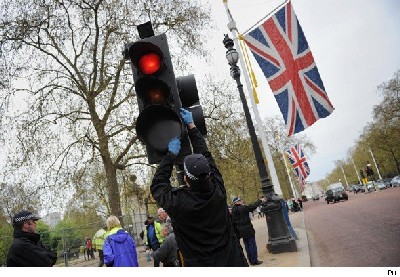
According to an article in Vanity Fair, London’s traffic lights were ‘rigged’ so that Olympic officials could get through London smoothly during the bidding process. In the article, entitled ‘Jumping Through Hoops,’ Sir Keith Mills, CEO of the London bid committee, is quoted as saying that “our nightmare was it would take forever to get to the venues…[so] when they came up to traffic lights we turned them green.”
Something for nothing – cars with performance and economy

Generally speaking, we assume that more powerful cars will use more fuel – after all, that extra power has to be generated by burning fuel. However, the fast pace of engine technology means that it is not quite so straightforward. A rather clever little website called www.cleanbhp.co.uk has worked out the amount of CO2 each car produces to generate each bhp – and the results are a real eye-opener.Some of the latest-generation petrol engines produce more than twice the power for the same CO2 or fuel consumption as older designs. For example, the Citroen C3 1.1 produces 139 g/km of CO2 in return for a measly 61 bhp, whereas the Mini Cooper S with 136 g/km of CO2 produces 181 bhp. Ironically, the two engines are even distantly related – BMW’s 1.6 litre engine in the Mini was originally jointly developed with Peugeot, owners of Citroen. So how can there be such a big difference?


