
Western automakers nervously watch as Russian market stalls
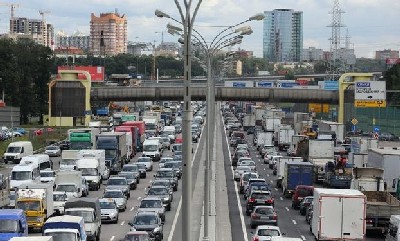
Global automakers are once again nervously monitoring the health of Russia’s car market as a sales slide threatens billions of euros committed to increase manufacturing capacity in the country.
Russia recovered quickly from a 2009 crash that halved auto sales to about 1.5 million. Last year, registrations rose to more than 2.9 million vehicles. In the first six months, however, sales are down 6 percent, causing John Stech, president of Volvo Russia, to make comparisons with 2009.
“Similar indications are also here. The ruble is getting weak and car loan interest rates are going up. It creates anxiety among Russian buyers,” Stech told Automotive News Europe in an e-mail.
A prolonged downturn would financially hurt all the big global automakers, especially those that have spent the past few years expanding their local production capacity.
$10 billion investments
Ford, General Motors, BMW, Hyundai-Kia, Mazda, PSA/Peugeot-Citroen, Mitsubishi, Renault-Nissan, Toyota and Volkswagen Group all have announced new or expanded capacity with a total of $10 billion (7.6 billion euros) committed to manufacturing by 2020, according to analysts at Boston Consulting Group.
Boston Consulting estimates that capacity in the country will grow to 3.3 million by 2016 from 2.3 million last year.
LMC Automotive analyst Carol Thomas said: “There is a lot more capacity going in than demand.”
However, the capacity “will get used up pretty quick” if the market resumes its previous growth and if there is global economic stability, Ted Cannis, CEO of Ford Sollers, Ford’s Russian joint venture, told Automotive News Europe.
The current downturn has been hardest on segments that have traditionally been the country’s strongest, said Bo Andersson, who heads Russian carmaker GAZ. “We have a real slowdown on the subcompact and compact segments, sedans like the Ford Focus,” he said.
The slowdown is causing some automakers to rethink their plans for the country, Ford’s Cannis said. “Some people are holding back with decisions right now because they can’t quite see as far ahead into the future as they could before.” Volvo’s Stech is seeing the same trend: “Today, Russian dealers have got a lot of unsold cars in stock.”
Untapped potential
The Russian market is forecast to decline by up to 5 percent in 2013, but Boston Consulting said the market will overcome its current slump and grow at an average of 6 percent annually through 2020 to become the largest in Europe – and the fifth biggest globally – by 2020.
Ford is not holding back investments because the automaker sees Russia’s huge untapped potential. “Car ownership is half of Spain; the disposable incomes are high; taxes are low compared to other countries; and families tend to be 10 years younger than European families buying vehicles,” Cannis said.
Renault-Nissan CEO Carlos Ghosn is similarly confident the market will grow. “There may be quarterly or even yearly falls in sales, but on the whole I have no doubt that the trend is upward,” he told Russian business newspaper Vedomosti last month.
The sales decline is likely to slow this year because of government finance scheme launched in July that lowers the cost of vehicle loans by about one-third for cars that cost less than 750,000 rubles (17,500 euros). The program likely will benefit the Avto-VAZ-Renault-Nissan partnership, which has a market-leading 27 percent share largely because of low-cost models from Lada and Renault.
Automakers such as Ford, however, are optimistic that customers will shift out of small sedans in favor of SUVs, which account for 35 percent of the market, according to figures from LMC.
The sector is led by Renault Duster (which is sold as a Dacia in Europe) after the SUV’s first-half volume increased 227 percent to 40,710, making it the country’s No. 4 seller overall ahead of longtime segment leaders such as the Lada 4×4 and Chevrolet Niva.
Rapid rise for Russia
Forecast ranking and sales of world’s largest car markets by 2020 (2009 rank)
1. China 28.5 million (1)
2. U.S. 16.8 million (2)
3. India 6.8 million (9)
4. Brazil 5.2 million (5)
5. Russia 4.4 million (10)
Source: Boston Consulting Group
1. China 28.5 million (1)
2. U.S. 16.8 million (2)
3. India 6.8 million (9)
4. Brazil 5.2 million (5)
5. Russia 4.4 million (10)
Source: Boston Consulting Group
Local focus
Automakers are increasingly manufacturing within Russia to avoid import duty and a recycling fee imposed solely on imported vehicles.
The recycling fee upset EU lawmakers who believe the fee was introduced to replace revenue lost to import duty reductions required by Russia’s 2012 membership of the World Trade Organization. That dispute should be diffused when the fee extends to domestically produced cars, likely by the end of the year said LMC’s Thomas.
The big commitments from global brands include Renault-Nissan’s $750 million investment into AvtoVAZ that includes boosting capacity for the combined group to almost 1 million cars a year.
Automakers, however, should be wary of committing even more.
“It is difficult to see how Russia can accommodate much further investment in vehicle assembly capacity in addition to what has already been announced,” said PwC analyst Michael Gartside. Exports would be one way to increase capacity, but aside from supplying neighboring former Soviet markets the options are limited. Said LMC’s Thomas, who specializes in central and eastern Europe: “No one’s really thinking of exporting to western Europe.”
Global automakers try to deal with what Boston Consulting called Russia’s “endemic volatility” regarding car demand by keeping production flexible by employing contract manufacturers.
GAZ builds Mercedes-Benz Sprinter vans in its Nizhny Novgororod factory, which is about 400km east of Moscow, where it also builds cars for the VW, Skoda and Chevrolet brands. PSA plans to build light commercial vehicles with Russian truck maker ZIL.
The leaders
Russia’s top-selling models based on first-half volume (% change from 1st half 2012)
1. Lada Granta 84,241 (87)
2. Hyundai Solaris 57,009 (-2)
3. Kia Rio 44,236 (5)
4. Renault Duster 40,710 (227)
5. Lada Kalina 37,081 (-45)
6. VW Polo 34,720 (-2)
7. Ford Focus 34,164 (-24)
8. Lada Priora 31,885 (-46)
9. Renault Logan 25,891 (-31)
10. Chevrolet Niva 25,855 (-13)
Source: AEB
1. Lada Granta 84,241 (87)
2. Hyundai Solaris 57,009 (-2)
3. Kia Rio 44,236 (5)
4. Renault Duster 40,710 (227)
5. Lada Kalina 37,081 (-45)
6. VW Polo 34,720 (-2)
7. Ford Focus 34,164 (-24)
8. Lada Priora 31,885 (-46)
9. Renault Logan 25,891 (-31)
10. Chevrolet Niva 25,855 (-13)
Source: AEB
Discounting
Volvo’s Stech said discounting is on the rise as automakers try to move unsold inventory. “We still see numerous ads promising buyers impressive discounts for cars produced in 2012,” he said. “The same picture was seen in 2009, when dealers had to sell previous-year cars with heavy discounts.”
Premium brands have been less affected by the downturn than volume marques. In the first six months, the three German premium brands posted double-digit sales increases, led by Mercedes’ 20 percent rise to 20,030.
There’s more to come from the premium brands, said PwC’s Gartside. “Their market share is still way below many other markets so there is potential for continued growth, especially given the strong demand for SUVs,” he said.
Supplier weakness
Despite its bullish forecast, Boston Consulting warned that that Russia still faces hurdles such as a weak supplier base, high logistics costs and volatile swings in demand.
Russian suppliers are typically small scale and have inadequate quality levels for latest-generation vehicles, he said. Automakers are able to work with just 10 percent of Russian suppliers immediately, compared with 80 percent in Brazil and 40 percent to 50 percent in China, according to data published by Boston Consulting last month said.
Study co-author Nikolaus Lang told Automotive News Europe that vehicle sales in Russia will grow if the government creates a stable market environment and “if the industry professionalizes along the whole value chain, from developing cars to producing components to manufacturing the cars and selling them.”


