
Royal Beuk BV to test bus driver fatigue warning technology
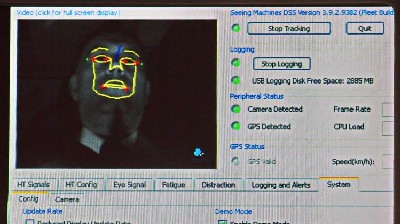
Royal Beuk BV said Tuesday it is outfitting 20 vehicles from six different charter vacation bus lines with a system designed by Australian company Seeing Machines. The technology monitors whether a driver is becoming drowsy.
It uses infrared light and a camera to register eye movements to see whether a driver’s gaze is distracted from the road for too long, or if he is blinking progressively more slowly — signs he may be close to nodding off.
If the system’s software determine there’s a problem, it will first sound an alarm for the driver. Further alarms will pull in human assistance or intervention
“What we see is that drivers learn very quickly not to be distracted from the road,” Ken Kroeger, the CEO of Seeing Machines, said in a telephone interview. “However, you can’t train someone to not be tired.”
Mercedes and Volvo have both introduced automobile systems that measure drowsiness by analyzing steering wheel movements, while Ford uses cameras to check whether a car is drifting out of its lane.
Cheaper solutions include ear-mounted devices that sound an alarm if a head has fallen forward, and a variety of smartphone apps that try to predict sleepiness or just keep a sleepy driver awake.
After completing trials during this winter and next summer’s holiday seasons, Beuk will act as European distributor for Seeing Machines.
Canberra-based Seeing Machines has previously signed deals with Caterpillar and BHP Billiton. The industrial version of the systems cost up to $20,000 each — in vehicles that can cost more than a million. The slimmed-down version going into the buses will cost less than $5,000, and the company hopes eventually to market them to the trucking industry as well.
Fatigued drivers are a major cause of road accidents, said University of Pittsburg Professor Timothy Monk, who studies the effect of sleep disturbances. He said he couldn’t speak to the merits of the Seeing Machines system Beuk is installing, but he applauded the effort.
“We’re just starting to recognize that driving drowsy is a lot like driving drunk, only there’s no social taboo on it,” he said. “But it’s just as dangerous, and you’re just as dead at the end of it.”


