
Researchers call for major change in US policies supporting plug-ins
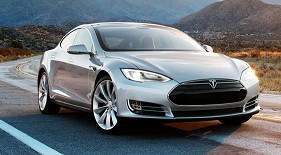
Although sales of plug-in vehicles (plug-in hybrid-electric and battery-electric vehicles, collectively PEVs) in the US climbed more than 80% in 2013 to more than 96,000 units (Tesla has not yet released its final figures) from 52,835 units in 2012 EDTA), the 2013 results still reflect a meagre new light-duty vehicle market share of ~0.6% for PEVs.
In a paper published in the journal Energy Policy, Erin Green of Green Energy Consulting; Steven Skerlos of the University of Michigan; and James Winebrake of the Rochester Institute of Technology argue that current US policies intended to promote the uptake of plug-in electric vehicles haven proven inefficient and ineffective.
Suggesting that “mainstream consumer bias” is an explanation for the policy deficiencies that have resulted in slower than expected market penetration of PEVs, they propose an alternative policy agenda including the leveraging of strategic market niches, targeted R&D and incentives, and loans.
Despite extensive government programs and incentives, PEV sales in the US reached only ~53,000 in 2012 (0.3% of vehicle sales), far below levels required to meet the Obama administration’s goal of one million PEVs on the road by 2015.
It is now clear that the one million vehicle threshold will not be achieved by 2015. This is because the goal was disconnected from market- and technology-constraints and, as a result, strictly dependent on how much the US government was willing to spend to achieve it.
As PEV policy costs mount—with an expectation to exceed $7 billion by 2019 (CBO 2012)—and the success of PEV policy increasingly in doubt, PEV policy strategy is also at a fork in the road. The government can continue to offer generous subsidies to prop up EV purchases within the mainstream market, or can choose to spend the money to nurture PEV niche markets, thus realizing the societal benefits of PEVS more efficiently and effectively.


