
Daimler has a new problem
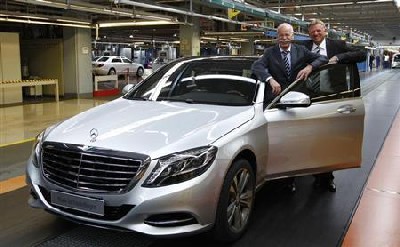
Daimler said it’s having trouble meeting orders for its Mercedes-Benz brand as all-time-high August sales put premium-car manufacturers on course for record full-year deliveries.
“We have a luxury problem,” CEO Dieter Zetsche said today at a Frankfurt auto show press briefing. “We have a shortage of capacity and cannot fully satisfy global demand.”
New models from Mercedes and rival brands BMW and Audi are propelling delivery gains at the German luxury-vehicle producers, in contrast to declines at European mass-market carmakers amid a recession.
Industry sales in the region, which are at a two-decade low, have “bottomed out, and there could be some improvement for the rest of the year,” Zetsche said today.
Mercedes said in August that it hired 4,500 vacation-period workers to keep up production volume during the summer holiday season, with extra shifts to build more A-class and B-class compacts in Rastatt, Germany, and additional SUVs in Tuscaloosa, Alabama.
Zetsche has a strategy for Mercedes to roll out 13 models with no predecessor in eight years in a bid to overtake the global No. 1 luxury-car manufacturer, BMW, in sales by the end of the decade. That compares with moves by BMW to maintain industry dominance by bringing out 25 models in the two years through 2014, with 10 having no predecessor.
Global deliveries of the Mercedes brand last month jumped 19 percent from a year earlier to 108,417 cars and SUVs, a record for an August, Daimler said on Sept. 5. Growth was boosted by an 85 percent surge in demand for the compact models and a 28 percent gain for the E-class sedan following a revamp of the model starting in April.
“A moderate recovery of 2 percent to 3 percent next year would be logical, as we’ve now attained a basic level of car replacement and the economy of some southern countries shows signs of improvement” in Europe, Juergen Pieper, an analyst at Bankhaus Metzler, said today.


