
British drivers are under-prepared for foggy conditions, says Edmund King
Yesterday morning’s pile-up involving around 130 cars on the A249 Sheppey crossing in Kent is a stark reminder of the dangers of driving in fog. The AA believes the design of the bridge may have contributed to the numbers involved in the crash, but like the police and eyewitnesses believe that fog was the main cause.
I was driving on the M25 at around 6.00am yesterday – and I was shocked to see a car driving about 2ft off my back bumper in thick fog. It was suicidal.
The great British motoring public are rarely shown in the best light when driving in adverse weather conditions. That driver on the M25 was tailgating me in thick fog. Others didn’t have their fog lights on. Some motorists don’t slow down in the rain or leave enough extra stopping distance in icy conditions. Elementary driving basics, you may think, but we should be doing more to promote better safety on our roads.
After Britain’s last major multi-car accident in 2011, when 34 cars collided on the M5 in Somerset, the AA petitioned the transport secretary to consider mandatory speed limit changes in bad weather.
It has been proven to work in France, where the limit on autoroutes stands at 130kph in good conditions, but drops to 110kph in rain or poor visibility.
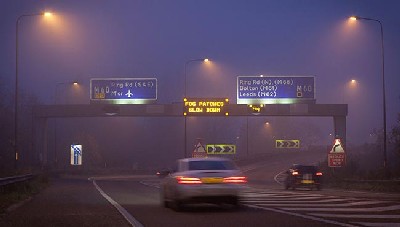
In Britain that only happens on main arterial roads, where there are digital matrix signs. But there is no reason why a similar reduction in speed limits could not be applied as a blanket law on all our roads at all times. It would force drivers to slow down to adapt to bad road conditions.
But the root cause of this is driver education. If our motorists were taught correctly in the first place, we would need fewer nannying laws to prevent dangerous driving. I find it incredible that a 17-year-old driver can pass his or her test and be let loose on a motorway without having driven on a motorway (learner drivers are today banned from M-ways).
The AA has put proposals to the Government suggesting that a mandatory motorway lesson would be a good place to start – catching our drivers when they’re still learning. Instilling safe driving habits at the start of their driving careers is surely the best way to reduce accidents.
And it’s not just young drivers. We all need to use some common sense when we’re driving. Slow down if it’s wet. Use your foglights and maintain a safe distance in misty conditions. Always make sure you can stop in good time. If we all did this – young and old – our roads may become a little bit safer.


