
old tyre Crumb rubber can lower road noise and reduce need for road maintenance
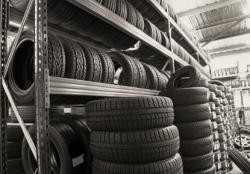
With funding from The National Science Foundation (NSF), Magdy Abdelrahman, an associate professor of civil and environmental engineering at North Dakota State University, is experimenting with “crumb” rubber—ground up tyres of different sized particles—and other components to improve the rubberized road materials that a number of states already are using to enhance aging asphalt.
It’s very durable. We mix it with different materials and in different percentages, and in different conditions, to find the best ways to add rubber to asphalt.
Asphalt rubber is the largest single market for ground rubber, consuming an estimated 220 million pounds, or approximately 12 million tyres, according to the EPA.
California and Arizona use the most asphalt rubber in highway construction, followed by Florida, the EPA says. Other states that are using asphalt rubber, or are studying its potential, include Texas, Nebraska, South Carolina, New York and New Mexico, according to the agency.
Ground tyre rubber, when blended with asphalt, produces longer lasting road surfaces, and can lower road noise and the need for road maintenance.
Abdelrahman’s research involves studying interactions of crumb rubber with specific additives to evaluate and characterize the physical and chemical properties of the compounds. He also is trying to determine whether certain conditions, such as bad weather, will cause chemical releases from the recycled materials—from polymers, for example—and the potential impact on soil and groundwater.
Abdelrahman is conducting his work with an NSF Faculty Early Career Development (CAREER) award, which he received in 2009. The award supports junior faculty who exemplify the role of teacher-scholars through outstanding research, excellent education, and the integration of education and research within the context of the mission of their organization. NSF is funding his work with about $400,000 over five years.
The grant’s educational component is strongly tied to the research, through developing a graduate/senior course on recycled material applications with significant scientific components, and through faculty-professional focus meetings to exchange experiences in the area of recycled materials.
He also plans to develop activities to recruit, train, and mentor students in the undergraduate and graduate programs, with the goal of preparing them for careers in recycled materials.


