
Nissan IDx Freeflow and IDx Nismo concepts debut in Tokyo
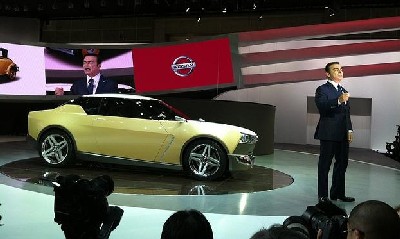
One hundred teenagers from around the world have consulted with Nissan designers to create a potential rear-wheel-drive sports coupe to woo young customers.
Two possibilities, unveiled today at the Tokyo Motor Show, are the IDx Freeflow and motorsports-flavored IDx Nismo.
Nissan officials acknowledge that the youth-focused concept cars bear an uncanny resemblance to the Datsun 510, a car that disappeared from showrooms at least two decades before any of their young consultants were born.
“There is a resemblance,” agrees Andy Palmer, Nissan global product planning chief.
“You can see from the design that there are hints of the 510 in there,” he says, referring to the sports sedan produced from 1968 to 1974. “They have heard of it. They talked to us about the 510 being a part of the brand. That was part of the inspiration.”
Palmer says the concept cars are the result of an online “co-creation” project — an effort to directly enlist Generation Z teens to develop a car that they might someday buy. Some forecasters worry that vehicles are losing their appeal among people born after 1990. In general, members of Generation Z were born after 1995.
“This is basically a way to look at Gen Z 14- and 15-year-olds and learn how they behave,” Palmer says. “Why aren’t they interested in cars, and what can we do to change that?”
Although the company will gauge public reaction to the IDx concepts, Palmer says Nissan hopes to develop an IDx production car in the next three to four years.
Nissan is studying a plan to build it using a spaceframe body construction and lightweight composite body panels that can be swapped out to offer a high degree of vehicle personalization. Consumers would be able to configure the vehicle online, choosing different lights, trim and panels.
Palmer did not specify a price range for the vehicle, saying only that it would have to be “affordable.”
He cautioned that the IDx concepts are not new Datsun 510s, but are inspired by the lingering appreciation of the old car.
“We put it in front of them and said, ‘Is this the kind of thing you’re looking for?'” Palmer said in a meeting here with reporters.
“We’re not exactly avoiding the linkage, but we’re not going out there to overtly link it to something from the past.
“It’s a modern take on a sports car. It’s downsized engine technology. It’s very connected.”
The 510 is popular among heritage enthusiasts as a “poor man’s BMW,” a small, boxy sports sedan made by a Japanese company that was not well known in America at the time.
Sports car designer and racer Peter Brock, who had worked on the design of the original Corvette Stingray among other achievements, raced the 510 to victory in Trans Am racing in the early 1970s.
Brock’s company — Brock Racing Enterprises, or BRE — developed a Datsun 510 BRE version of the car for Nissan.
Palmer noted that the IDx Nismo on stage at the Tokyo show also sported “BRE racing stripes.” Brock was on hand at a Nissan reception during the show.
When everything old is new again!


