
young female executives in China boost Maserati Quattroporte sales
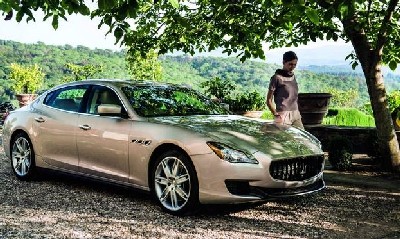
Young Chinese businesswomen are the driving force behind Maserati’s fast-growing order book.
“Forty percent of our clients in China are very successful young businesswoman who love European craftsmanship and want to be chauffeured in their new Quattroportes,” Maserati CEO Harald Wester stated. By comparison, female buyers account for less than 5 percent of Maserati’s sales in Europe and the United States.
The Fiat-controlled luxury car subsidiary has received more than 22,700 orders globally through the first nine months. That’s a huge increase for a brand that had global sales of 6,288 cars in 2012. Boosting Maserati’s global unit sales is crucial to Fiat CEO Sergio Marchionne’s plan to make Fiat’s automotive division profitable again in Europe by 2016. Fiat lost 700 million euros ($928 million) last year in Europe.
Maserati’s hottest model this year is the new Quattroporte flagship, for which the automaker has almost 10,000 orders. The Quattroporte’s top market is China, where the brand already has 4,000 contracts for its most expensive vehicle.
A fully equipped, V-8-powered Quattroporte starts at 150,000 euros in Europe but costs the equivalent of 325,000 euros in China because of the country’s import duty and luxury tax. The base variant of the car with a V-6 starts at 111,000 euros in Europe but costs the equivalent of 205,000s in China.
In China, Maserati buyers are also much younger than in the carmaker’s other key markets. The average age in China is about 37 years old compared with 55 for Europe and the United States, Wester said.
With a volume of 2,640, the U.S. market was Maserati’s largest in 2012, accounting for more than 40 percent of the brand’s total sales, but China, No. 2 in 2012 with 950 units, is expected to narrow that lead in 2013. This year Maserati plans to deliver 6,500 cars to the United States and 5,000 cars to China. The United States is expected to maintain its No. 1 status for Maserati because of strong demand in the market for the Ghibli mid-sized sedan, for which order books in China did not open until September.
Maserati is on track to easily beat its sales record of 9,000 cars set in 2008. The automaker plans to build about 20,000 units this year but because of the lead time needed to get the vehicles from Italy to the United States and China, Wester predicts total registrations of about 16,000.
The CEO also reiterated that the company aims to sell 50,000 cars annually by 2015. “Our investment [in new models] is starting to pay off,” Wester said, referring to the 1.5 billion euros that Fiat plans to spend on the brand from 2011 to 2014. Wester is counting on the forthcoming Maserati Levante SUV to account for 20,000 to 25,000 sales annually after it 2015 launch.
The production version of the Levante will use the same underpinnings as the Quattroporte and Ghibli and will be built at Fiat’s Mirafiori plant in Turin, Wester said. Maserati first showed its SUV as a concept at the 2011 Frankfurt auto show. The initial plan was to underpin the SUV with the same platform used on the Jeep Grand Cherokee and to produce both vehicles in Detroit. Marchionne decided earlier this year to move Levante production to Mirafiori as part of his plan to use spare capacity at Fiat’s underutilized Italian factories.


