
Europe plant capacity crisis to extend to 2016
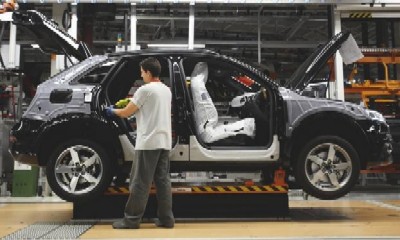
In 2011, Audi started producing its Q3 SUV at sister brand Seat’s underused factory in Martorell, Spain.
Europe’s worsening car factory overcapacity is not expected to improve for at least another three years, according to analysts at IHS Automotive.
“We expect the situation to get healthier when the production volumes will have recovered, i.e. on the 2016 to 2017 horizon,” Denis Schemoul, head of Europe vehicle production forecasts for IHS Automotive, told Automotive News Europe.
To deal with the problem automakers have been closing plants or making radical changes to fill capacity in Europe.
Renault-Nissan will shift production of the Nissan Micra subcompact from its Indian factory to Renault’s underperforming Flins plant in France, where labor costs are much higher. In 2011, Audi started producing its Q3 SUV at sister brand Seat’s underused factory in Martorell, Spain.
85 underused plants
IHS figures show that more than half of Europe’s 160 car plants operated below 70 percent of their total capacity in the first quarter of this year.
In first three months, 85 factories were operating at 70 percent or below, compared with 74 plants during the first quarter of last year. An automaker typically needs 75 percent to 80 percent utilization for a plant to break even.
Philippe Jean, head of the automotive industry unit of the European Commission’s Enterprise and Industry Directorate General, said the figures showed the problem is more widespread than people thought.
“They think it’s two plants from Peugeot in France and two from Fiat in Italy. No, it is a broad problem felt across Europe,” he told the Automotive News Europe Congress in Paris last week.
Jean said one solution would be for struggling plants to keep paying workers but run the production line three out of every four weeks a month.
“They could use this [off] week to ensure they have better training, to have new technologies,” he said.
East vs. West
The European Commission has “tried and failed” to solve the overcapacity problem, Jean said. He blamed the failure on “lack of consensus” among member states and carmakers.
Automakers are trying to solve the problem by closing factories in Europe. By the end of next year Ford, Opel, PSA/Peugeot-Citroen and Volvo will have shut down a combined five vehicle plants in countries such as Germany, France, the UK, Belgium and Sweden. Those sites will join Opel’s Antwerp, Belgium, factory and Fiat’s plant in Termini Imerese, Italy, on the list of plants closed since the 2008-2009 global economic downturn.
While plants in western Europe have been shuttered, factories in central Europe and Turkey have opened or expanded. As a result, Schemoul said that Europe’s car plant capacity has remained the same for the past 10 years, with the East gaining and the West losing.
“Between 2002 and 2012, we estimate that capacity in western Europe fell by 3 million units while it grew by 3 million units in central Europe and Turkey over the same period,” he said.
In the same period, western European market shrunk to 11.3 million new-car registrations last year from a little more than 14 million in 2002, according to industry association ACEA.


