
Air Liquide plans for long-term growth in hydrogen-powered cars
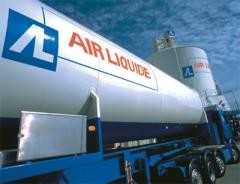
France’s Air Liquide is expanding its business building filling stations for hydrogen-powered cars as it predicts growing demand for the vehicles that use fuel cells to generate electricity.
“In territories like Germany or France, you need about 1,000 stations” for full coverage, Pierre-Etienne Franc, head of the Advanced Business and Technologies unit, said in an interview at the French gas maker’s research center in Sassenage near Grenoble. “It takes about 10 billion euros ($13.7 billion) to build a decent fuel-cell infrastructure in Europe.”
The company has built more than 60 hydrogen filling stations worldwide and agreed in September with partners including Linde to expand Germany’s network of 15 hydrogen filling stations to 100 by 2017 and 400 by 2023.
“In the long term, whether it’s five, 10 or 20 years, we’ll have to move to fuel cells, or let the planet burn,” Franc said. “If we want to de-carbonate transports, we won’t have the choice because there won’t be enough bio-fuels, batteries don’t provide enough autonomy, and hybrids don’t solve the problem.”
Fuel-cell cars may represent “tens of thousands” of sales for the French market by 2025, especially if the cost of gasoline rises, Franck Pichot, Hyundai product marketing director for the country, said as he handed the keys of the first two hydrogen-powered cars registered in France to the Air Liquide executive.
Spurred by hydrogen’s allure as an abundant fuel, carmakers from Hyundai to Honda, Toyota, Daimler and General Motors have collectively poured billions of dollars into fuel-cell vehicles since the 1990s, adding them to battery-only and plug-in hybrid models being sold to curb petroleum use and reduce carbon-dioxide emissions.
Critics, such as Tesla CEO Elon Musk, say the technology is too complex, too costly and not clean enough, since most hydrogen is generated from natural gas. Tesla competes for resources with hydrogen cars in the form of government subsidies for rebates, fueling infrastructure and green-car credits that have made the company profitable this year.
Hyundai and others say that fuel-cell electric cars have petroleum-like performance with zero tailpipe emissions, while they avoid the range and refueling-time issues of electric autos. The Hyundai ix35 bought by Air Liquide can be refueled with hydrogen in three to four minutes at a cost of about 50 euros, and has a range of 594 kilometers per filling, about twice as far as a battery-powered car, Pichot said.
The company plans to build 1,000 ix35 SUVs in its South Korean plant in Ulsan by 2015, and is initially targeting public and private sector fleets as economies of scale help to reduce costs, while Air Liquide and rivals build more hydrogen filling stations with government support, Pichot said.
Countries from Germany to Japan and the United States have begun initiatives to promote the construction of hydrogen filling stations, with unit costs of a bit more than 1 million euros, which can be cut to 800,000 euros, according to Air Liquide’s Franc.
Nissan and Renault CEO Carlos Ghosn last month said consumers won’t take to fuel-cell vehicles before the decade’s end because they only have a few locations to refuel.
France is lagging behind as PSA/Peugeot-Citroen isn’t investing in fuel cells as it focuses on other technologies amid financial woes, and Renault has bet on battery-only cars, leaving its Japanese partner Nissan to lead research into hydrogen-powered cars, Franc said.
In Japan, Air Liquide signed a partnership with Toyota Tsusho Corp. in October to build two stations next year as the country plans to install 100 by 2015.
Hydrogen fuel cells have been used in spacecraft since the 1960s. They generate electricity and emit only water vapor. For mass-market appeal, carmakers are competing to cut the cost of the cell stacks, which use expensive precious metals such as platinum, and the high-pressure carbon-fiber fuel tanks.
Fuel-cell cars “will necessarily be high-end vehicles,” even as lower maintenance needs than gasoline-powered cars and rising CO2 taxes will reduce total cost of ownership, Hyundai’s Pichot said. “When gasoline hits 2 or 2.5 euros a liter, these solutions will be even more legitimate.”
For gas producers such as Air Liquide, which had 1.9 billion euros in hydrogen sales in 2012, mostly to refineries and petrochemicals makers, the stakes are high. “A million fuel-cell cars is about 1 billion euros of hydrogen revenue per year” for the industry, Franc said. “The potential is huge, but it won’t materialize right away.”


